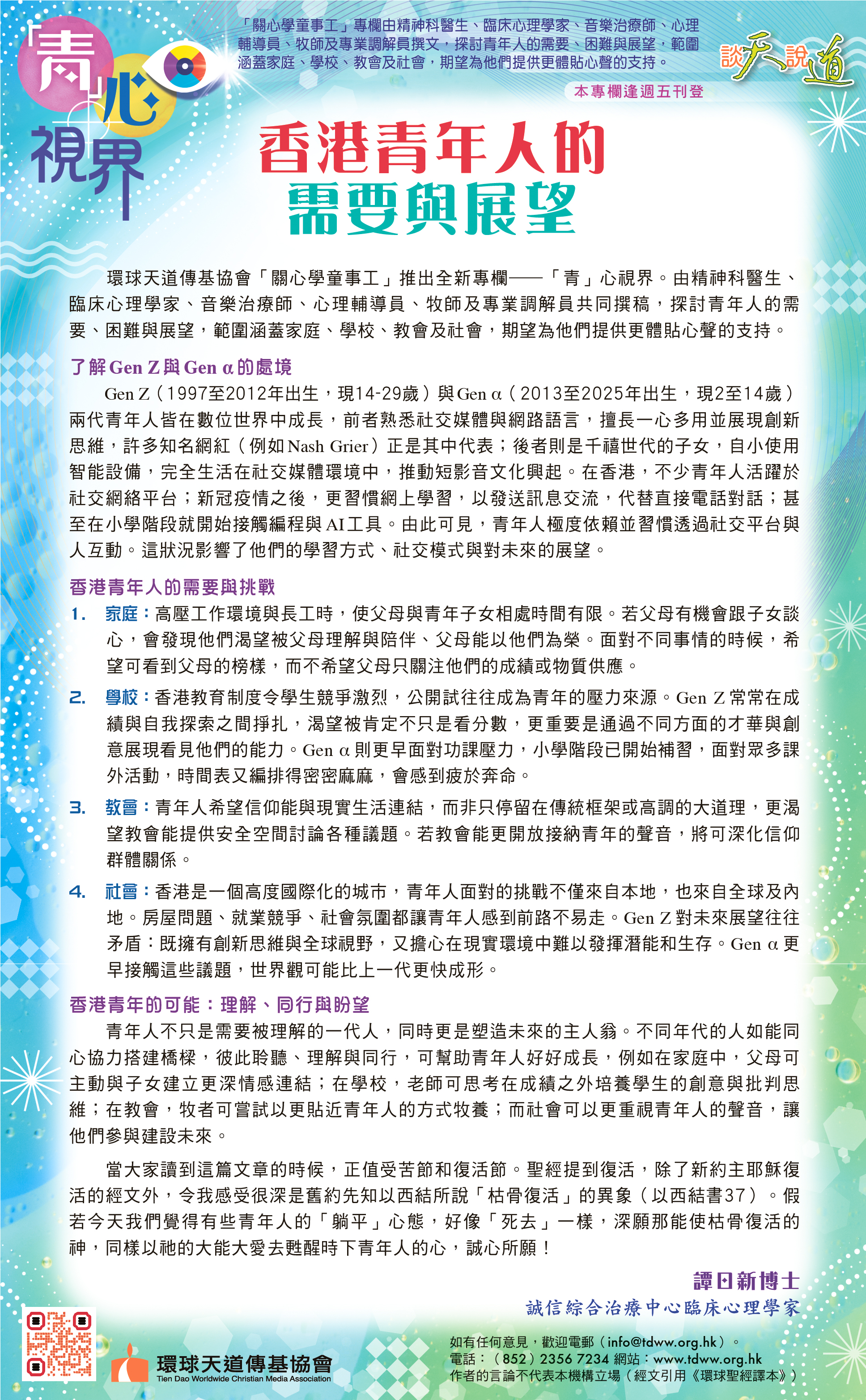
Gen Z(1997至2012年出生,現14–29歲)與Gen α(2013至2025年出生,現2至14歲)兩代青年人皆在數位世界中成長,前者熟悉社交媒體與網路語言,擅長一心多用並展現創新思維,許多知名網紅(例如Nash Grier)正是其中代表;後者則是千禧世代的子女,自小使用智能設備,完全生活在社交媒體環境中,推動短影音文化興起。在香港,不少青年人活躍於社交網絡平台;新冠疫情之後,更習慣網上學習,以發送訊息交流,代替直接電話對話;甚至在小學階段就開始接觸編程與 AI 工具。由此可見,青年人極度依賴並習慣透過社交平台與人互動。這狀況影響了他們的學習方式、社交模式與對未來的展望。
從心理學與歷史人物的經驗來看,事實幾乎剛好相反。不同年代的作家、領袖和專家都指出,懼怕並不是在勇氣的對立面,反而是勇氣的「關鍵素材」。Mark Twain在 Pudd’nhead Wilson一書中寫道:「勇氣不是沒有懼怕,而是學懂抵抗和駕馭。」曼德拉也曾說:「I learned that courage was not the absence of fear, but the triumph over it.」(Mandela, 1994)如果你面對挑戰的時候,坐立不安,並不代表你「唔掂」,反而意味著你剛剛好站在勇氣之門前。
Beck, A. T., & Clark, D. A. (1997). An information processing model of anxiety: Automatic and strategic processes. Behaviour Research and Therapy, 35(1), 49–58.
David, S. (2016). Emotional agility: Get unstuck, embrace change, and thrive in work and life. Avery.
Gilbert, P. (2009). The compassionate mind. Constable & Robinson.
Gilbert, P. (2014). The origins and nature of compassion focused therapy. British Journal of Clinical Psychology, 53(1), 6–41.
LeDoux, J. E. (2012). Rethinking the emotional brain. Neuron, 73(4), 653–676.
Levenson, R. W. (1988). Emotion and the autonomic nervous system: A prospectus for research on autonomic specificity. In H. L. Wagner (Ed.), Social psychophysiology and emotion: Theory and clinical applications (pp. 17–42). Wiley.
Mandela, N. (1994). Long walk to freedom: The autobiography of Nelson Mandela. Little, Brown.
Neff, K. D. (2003). Self-compassion: An alternative conceptualization of a healthy attitude toward oneself. Self and Identity, 2(2), 85–101.
New International Version. (2011). Holy Bible. Biblica.
Twain, M. (1894). The tragedy of Pudd’nhead Wilson. American Publishing Company.










 環球天道傳基協會