Course Outline:

Session 1
Assessment & Diagnosis of Stress-related psychological disorders
including sacrifice syndrome, compassion fatigue and caregiver burnout
but It will omit biological reactions to trauma
but add assessment of stress & resiliency

Session 2
Attributional styles
·           Risk factors: ambiguity, comorbidity
·           Survivor of Death
·           Dissociative characteristic: flash backs
·           Post-Traumatic Character Changes
·           Body memory, emotion, and behaviors
·           Criminal based victims vs. natural and accident issues
·           Terrorists’ victims

Session 3.
Complicated PTSD:
a. complex PTSD,
b. post-traumatic embitterment disorder
+/- logotherapy (link with Christian faith) (by Dr. KY Mak)

Session 4 and 5
Treatment considerations
Cognitive/meanings focused, emotional based focused, behaviour based, medical based
•    Managing flashbacks
•    The reprocessing of narrative
•    Hypnotic skills
•    Exercises and stress reduction
•    Healing work
•    Inner child
•    EMDR
•    Supportive carers
•    Self-hypnotic intervention
•    Children and elderly
Gen Z(1997至2012年出生,現14–29歲)與Gen α(2013至2025年出生,現2至14歲)兩代青年人皆在數位世界中成長,前者熟悉社交媒體與網路語言,擅長一心多用並展現創新思維,許多知名網紅(例如Nash Grier)正是其中代表;後者則是千禧世代的子女,自小使用智能設備,完全生活在社交媒體環境中,推動短影音文化興起。在香港,不少青年人活躍於社交網絡平台;新冠疫情之後,更習慣網上學習,以發送訊息交流,代替直接電話對話;甚至在小學階段就開始接觸編程與 AI 工具。由此可見,青年人極度依賴並習慣透過社交平台與人互動。這狀況影響了他們的學習方式、社交模式與對未來的展望。





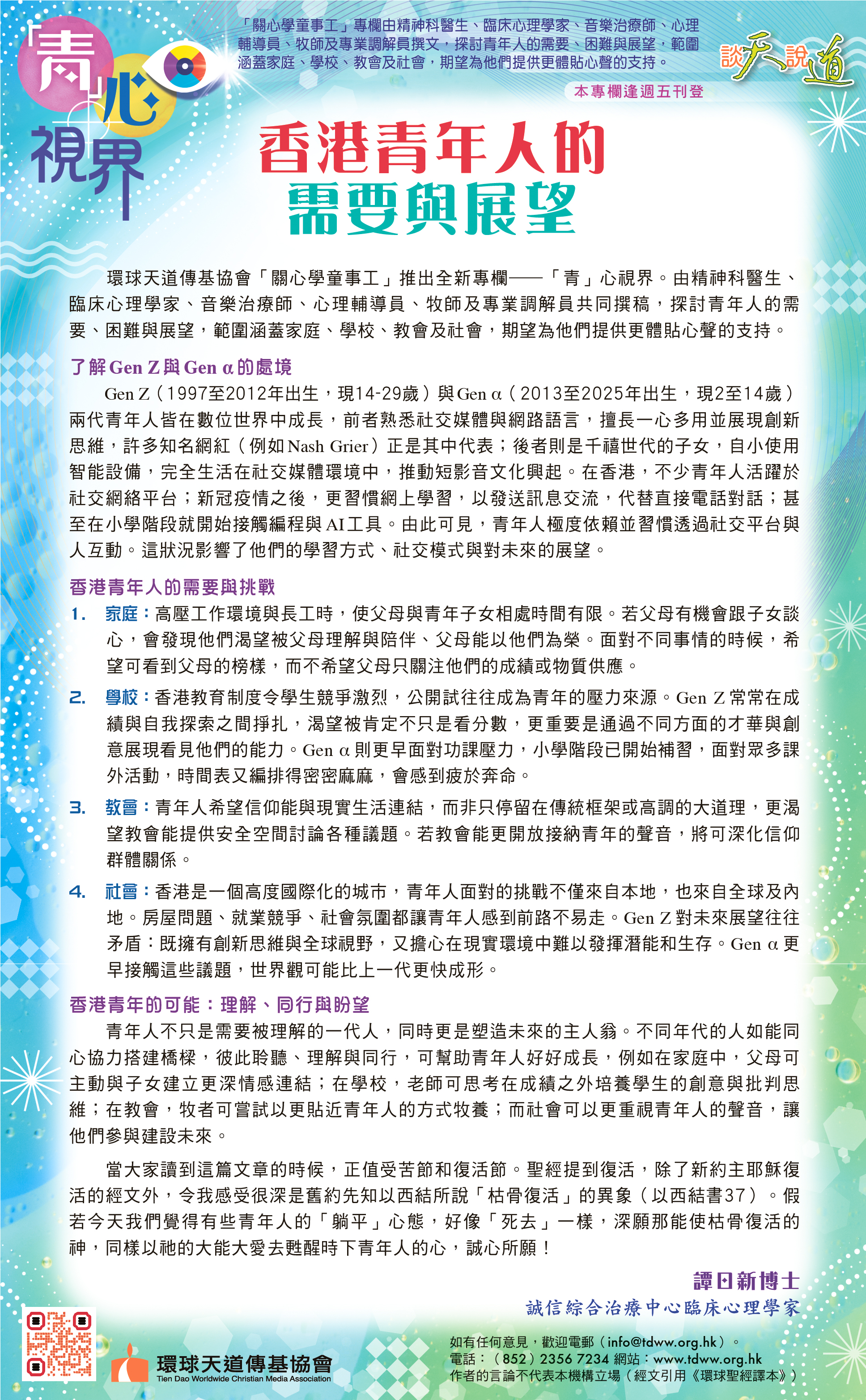
 (本專欄逢週五刊登)
 環球天道傳基協會