
「是你創造我的肺腑;我在母腹中,你已塑造我。我要讚美你,因我受造奇妙可畏;你的作為奇妙,我深深知道。」詩篇139:13-14《環球聖經譯本》
文:黃葉仲萍博士 (全康澄心基金董事會主席)
近年的天災人禍驅使我們對創傷後遺症有更多更深入的了解。在戰爭中,危機事件、爆炸、火災、突襲、強暴、仇殺、種種人為的傷害使受害者失去一切。我們除了要追究施暴者之外,我們更要想想怎樣幫助受害人復原,撫平他們所受的傷害,以致他們不會把傷害延續下去。近年又有氣候變化,由地質改變,地殼移動所引發的地震,海嘯、水浸、火山爆發等等,使地球村的人類驚愕地發現大自然的威力。經歷了災害的倖存者往往痛失至親至愛及一生經營的一切,他們也是創傷受害者,天災奪去他們的安全感。面對種種形式的創傷,人的反應與對應的行為不一樣;但重建、復原所接受的治療過程都是漫長。綜觀整體狀況,有部分人永遠無法釋懷,而有些人卻能夠從創傷中走出來,像火鳳凰一樣脫胎換骨,使他們變成更成熟,更有耐力,更有智慧,更懂得珍惜生命與感恩的人。
母親或早期照料者是情感發展極重要的基礎
近年許多科學家對人腦的研究,加上行為心理學家對親密關係多面的探索,兩方面的發現加起來,終於讓我們對創傷治療刷新了一些看法與做法,能夠給予受助者更適切的治療方法。
著名神經生物學家Allan Schore[1](艾倫)對人腦與神經系統進行了最深入及廣泛的研究。從他的研究所得,Affective Development(情感發展)應用在創傷治療上是許多人忽略的。原來母親或早期照料者對個人的情感發展有著極重要的基礎。依戀關係對我們的影響至為深遠。健康的情感基礎像避震器一樣,對個人一生面對困難的對應能力發揮奇妙有效的助力。
艾倫又特別提出母親左手懷抱嬰孩的自然動作,其中包含著極重要及深遠的智慧。他發現這種姿態使照料者與孩子的接觸面最大,讓她能夠照料及專注孩子的需要;通過凝視,母子的感情、神經系統都可以完全連接起來。孩子因此產生一種安全的基礎,令孩子日後更能對其他人作感情回應,以致他的溝通能力更好,都為他奠定了最好的生存基礎。艾倫又稱,小孩子0至3歲是腦部針對情緒及學習新事物的發展時期,亦即主管感情及創意發展的右腦時期,他更把John Bowlby(約翰‧鮑比)的Attachment theory[2](依戀理論)更清楚具體地以科學的方法提出證據。
因近年在創傷治療及心理康復重建上的需求及發展,使我們對腦的認識多了,因而對治療精神問題產生很大的變化。除了以往客觀駁斥不合理的思想之外,我們更積極地正視創傷,啟動個人天賦的自癒能力,接受超我的幫助。專門研究情緒的心理學家Ross A.Thompson[3](湯遜)曾表示,以往一直以為情緒是受其他人操控,但從早期生理及精神發展看來,我們愈有理由相信情緒是有其自動調節的功能。因此,我們更需要注意創傷的靈性層面。
創傷治療與心理治療創新突破
在人的身體有兩組肌肉,分別是隨意肌及不隨意肌。所謂隨意是受控制,亦是多由後天所學習得來,較易調節改變;而不隨意肌是不受意志所控制。在心理重建上出現的困難,往往是由不隨意肌而來。因為不隨意肌不受意識所控制,他們像由自己的一套記憶意識系統所控制似的,所以引起近二十年來精神心理學家更深入的研究探討。
Bill Bowen[4](鮑恩)、Daniel Siegel[5](西格爾)、Peter Levin[6](列文)三位在近二十年來於創傷治療與心理治療上作出創新而突破的做法並有新發現,他們亦同時影響到心理治療的切入方法。他們都認為人腦有三個部分,這較以往的左腦右腦更為深入,解說人行為背後的策劃與控制方法。(圖1)[7]在圖中所顯示的三個區域,Neo-Cortex(大腦皮質)是後天語言與理性的部分,是三個部分中最依賴語言能力來發展的,也是最遲發展的部分。行為治療法中駁斥非理性思想的理論架構中,是十分強調這部分的控制能力的做法。以往我們在處理許多創傷個案中,當事人出現解離現象,突然失控,掉落在失控、驚惶失措之中。如果單單倚重語言來治療是不足夠的。對許多創傷來說,創傷只是一部分的問題,往往個人的心理建構對當事人的復原有很深遠的影響,所以我們更需要認識管理情感、反應的部分,即是腦的第二個區域──橋腦(Limbic Area)。
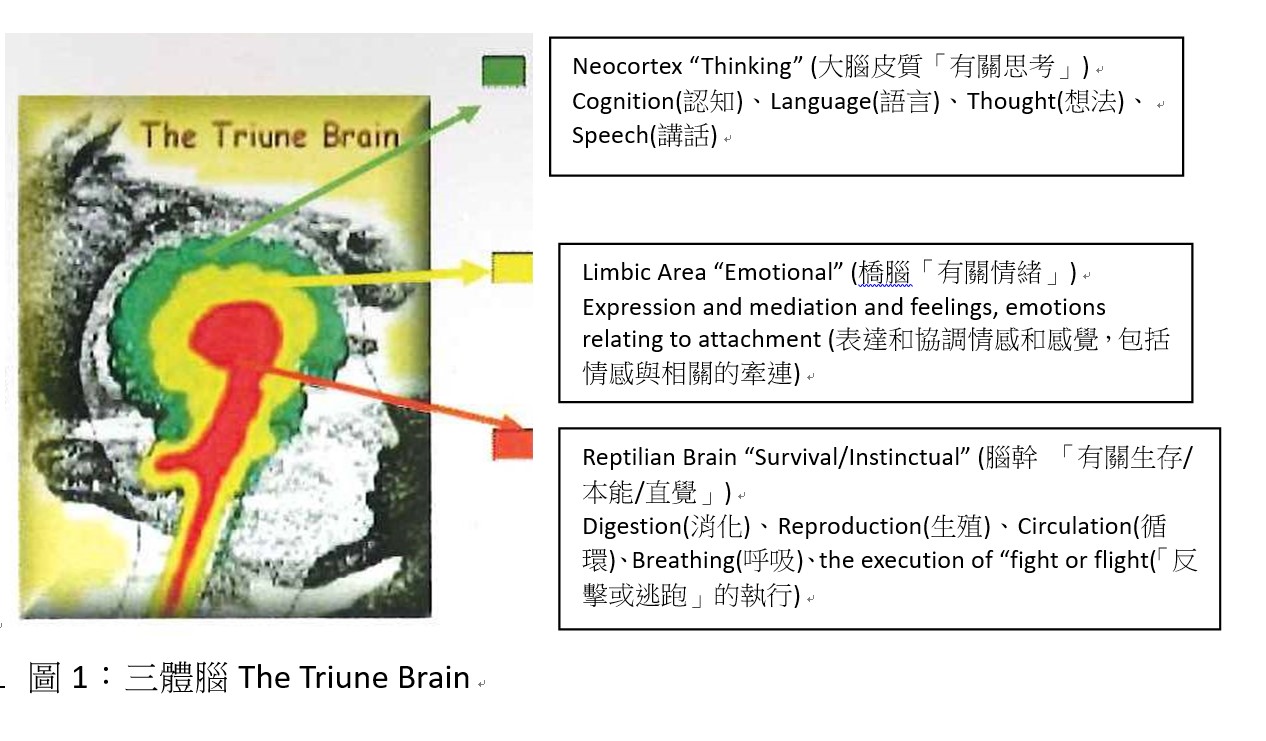
上述三位學者詳細解構受創的人,明白他們不單受到當前創傷的影響,而是創傷會重新喚起早期成長的創傷經驗。這些創傷經驗甚至在當事人還未有記憶意識之前便深藏在他的身體感覺中。西格爾更詳細推論這些與早期照料者有著極深切的關係。因為早期的經驗,他們建立一套自我保護的方法。許多情緒的反應在人際、婚姻關係上影響深遠,以往的心理治療取向做法並不能夠完全釋放其中的困鎖。Reptilian brain(腦幹),西格爾稱之為第一個腦,一個我們的原始腦神經系統。遠在受精卵成形的最初期,胎兒所感受的環境,他儲存在身體感覺反應上的一切,這些事的發生都在語言建立之前,所以很難追溯前因後果,但這些早期的記憶反應是儲存在這個原始系統之內。所以一旦誘發啟動這些早期的系統所產生的反應,有時會令人費解,甚至覺得完全不合理。
不過在創傷治療中,我們會見到這些吊詭的現象,許多人因為創傷所得的醫治而令到整個人生起了變化,使到整個人格建構改造,性情改變,人生取向價值觀改變等。在此,我甚至驚嘆造物主的奇妙,借用一般人慣用的說話來形容,就是「因禍得福」。在治療的過程中,受助者對造物主的認識與聯繫是一個重要的關係。這是治療靈性的部分,也是一般心理治療未能夠透徹探討及處理的範圍,然而,這卻是創傷治療普遍而又關鍵的部分。
人物見證:
從以下的故事我們可以更深感受到受助者有信心讓神介入治療當中,而最令人驚愕的就是神原本就賦予人有自癒能力,只是我們總是倚靠外力,又或者操之過急:
- 可兒的故事
現在想起仍然不大明白。可兒(化名)像老早就盯著我,知道我可以幫助她的樣子。其實我根本沒有把握,甚至希望她會另請高明。事實上,我只是努力陪她,因為我相信她清楚自己的一切,而且我看見小妮子知道自己擁有的能力。
可兒是班上的學生,她來找我的時候是她剛經歷了一個意外。當時她是旅遊車上的負責人,帶著滿滿一車老人出外,湊巧遇上意外,她努力幫助驚惶的乘客一個個爬到車外等候救援。我心想:「好傢伙能夠按耐著自己的情緒,在這種混亂的狀態中發揮出她的能力,真不簡單。」因為這樣,我看見並相信她的能力,所以我開始給她治療,已四年了;而涉及的治療範圍遠遠超過我的想像。
可兒的案子不易做,本來我以為她從撞車的事件穩定下來之後,我便可以退場。結果是案中有案,峰迴路轉。
可兒接受治療沒多久,便不再恐懼,可以如常上班。可是工作上,她遇到的驚嚇場面不少!因為情緒低落的老人會自殺,也有人暴斃。可兒都有耐性,有愛心並勇敢地處理好。偏偏這時她的外婆病倒,她心如刀割,而她最害怕的事也發生了──外婆病逝。這件事簡直把可兒摔到地底的黑暗世界裡。接著,她的治療令我許多時感到吃力及束手無策。因為她經常陷入一種解離狀態,身子彎曲著,像胎兒的樣子,而且感到極度痛楚,不能夠說話。書本記載都是創傷引起的狀況,她往往不能說話,只是一次又一次重覆她的創傷。我感受到很大壓力,也嘗試說服她暫停心理治療。
可兒想出用寫信的方法,每次見面前後,她都會把她經歷的一切寫出來。初期,她描述她的痛及一些令人觸目驚心的圖畫,其中有很深的傷口,也有很長很鋒利的刀。這些資料慢慢加起來,我才知道她十多年來接受精神治療的病歷:小五第一次自殺後,多次自殺入院;中學時期大部分時間在醫院渡過。這次她的哀傷把她的創傷抖了出來,原來她雖然長期接受精神科治療,卻一直未有好好談過她自殺的原因。
可兒很幸運,因為她有一些不離不棄的老師、朋友、親人、甚至一位多年照顧她的醫生。可兒不單要正常生活,更要自由自主的生活,她要撫平以往的創傷,更要為信仰而活。
以往治療的方向都倚重她的外在資源,但有次她改變了我的看法,因為她做了一件極不尋常的事。自此之後,我積極帶領可兒認識她自己的能力,接受自己,運用她的自主,擁有自己的意見。有一天,我很意外地收到她在廈門鼓浪嶼寄來的名信片及一封信。我還以為搞錯了,我接著收到她的信。收信對象卻是她深信的天上父親(天父)。原來她冒險跑到一個陌生的地方,為了實實在在感受及再主宰自己的身體。她靠著一份堅定的信心,毅然踏上冒險的旅程,但卻有意想不到的收獲。
爸爸:
「你獨自一個旅行,還要到國內?」「你在旺角也會迷路,普通話又不行,能否安全回港呀?」「為何你要獨自旅行?為何選擇鼓浪嶼這個地方?」……我就是在旁人這些疑問及擔心下,開始這個奇妙的旅程。
沒有電視機、沒有收音機、沒有電腦,我們的人生還有甚麼?
從窗外傳來的打雷聲、貓兒聲、小狗汪汪叫,在石屎森林中,我們或會將它們界定為「噪音」,但在這裡就成為一首又一首柔和的搖籃曲,讓我安然入睡。浪濤聲、雨點聲…… 只要細心聆聽,你定必戀上它們吧!每天早上,小鳥聲喚醒了我。每當天色漸漸轉暗,氣溫下降時,就是回旅舍的時候。如此看來,時鐘和響鬧裝置不適用於這旅程吧!慶幸沒有與「手提電腦」結伴同行,否則我會錯過很多很多美好的景物。
這裡的貓兒從不怕人,只要你輕輕一叫,她就會從對面的屋頂一直走到跟前,用身體在你的腳邊擦來擦去。當你靜靜坐在咖啡室看書時,她會若無其事,大搖大擺地從人群中擦身而過。
這個小島確是一個美好的地方,我可以將工作、功課全然放下,甚至將淚水暫時收起,好好享受休息的時刻。「享受」─ 就是沒有時間限制,也不必預早安排景點行程,單憑個人的感覺、體力而行。「享受」─就是漫無目的地走,看看當地人的生活,或在碼頭旁的餐廳書寫明信片。我曾坐著不作任何事,腦袋空白一片,只是用心聆聽四周的事物,「感受」自己的感受和需要,這是奢侈的生活嗎?
(可兒開始認識及直接去感受自己的身體及了解自己的看法與需要,這是一個擁有自我主權的重要一步!)
無可否認,一個沒有方向感、國語奇差的我,在沒有任何資源下,單憑網上資料,獨自去到一個不熟識的地方,確實令身邊人放心不下。從協助訂機票的同事、朋友仔、家人(當然包括你們)的身上,我不只聽到,還看到、感受到你們的關心(及擔心)。表面不甚驚慌的我,事實在出發前的一天曾致電給辅導員黄太說:「我的心開始有點害怕了!」
有時候拿著地圖,明明找到正確的路線,但獨個兒、沒有信心的我往往在路邊思前想後才踏出第一步;有時候來來回回,兜兜轉轉,又回到起點;有時候走得太累或天雨關係,就回到旅舍稍作休息,改天才再次出發。
旅程中,總有體力透支或傾盆大雨的時刻,或是因為沒有信心、容易迷路的特質,使我需要花更多的時間去完成旅程。過程中,我會猜疑自己的判斷是否正確,但靠著手執地圖,問問當地人,總可以到達目的地!我曾笑說:「因為自己容易迷路,平常人只需兩天時間遊歷,我就需要雙倍的時間,所以便留在島上整整五天了!」爸爸,我的生命也是如此嗎?
在我的生命中,有很多悲傷、困難的時刻,或是種種原因,走得總比別人慢,但同時也比別人經歷得多。然而當我去接納自己特質和弱點,不計較路程的長短,靠著天父,成長就在眼前!對嗎?
(可兒開始轉向靈性層面去尋求她的出路。她透過自己與神的關係及認識去明白自己所受的「苦難」的意義 )
2010年2月21日
可兒自小就是一個乖孩子,而父母的訓練也要求她絕對服從長輩與權柄,所以可兒不可以有自己的意見及思想,也不能違背別人給他的意見,唯一不需要讓別人囉唆的話她就要做得很好,也不容有錯。
在這些原則下,可兒不能夠放過自己,她不容有失,所以在唸書與工作上一直都很努力、很優秀。原來她小小年紀自殺只是由於父親對她不滿意,而她也接受不了這件事。只是當她使勁用刀劃下去的一刻,她沒有估計到那傷口會是這麼深,一下子使她痛極了。當下的她並未立刻感受到痛苦,因為身體在一個完全驚嚇的狀態中,她只看見大量血湧出來,她嚇呆了!
可兒在創傷的當下沒有感受到的痛,一直藏在她的身體裡面,身體上的傷口雖然癒合了,但心靈的創痛與及這藏在肌肉記憶中的痛,仍然會侵襲她。有時她為了克服這痛,要用另外的痛楚麻醉自己的神經。沒想到一次的意外對她的影響是接連不斷的自殘、自殺,與及長期在精神治療的束縛中生活。
輔導的後期,可兒寄了以下的信給我,她很清楚扼要地把多年來治療者的問題一一解答了!
黃太:
以下是今天醫生的提問:
現在有甚麼內在的深層問題需要處理?
創傷、被遺棄、婆婆、校長
創傷、被遺棄從何而來?
第一次自殺的經歷,留院的經驗。
以上的原因有關連嗎?
第一次自殺的原因,是因為當時我覺得自己被家人遺忘,情感上被遺棄了。
第一次自殺!?那共有多少次自殺?
小六、中一、中三、中四、中五。
那第一次自殺之後,家人對你的態度有改變嗎?他們的反應如何?
我記得…發生事後…媽媽趕到學校…爸爸自行到醫院…他的第一個反應是「責罵」,還記得其中一次爸爸的反應是…「我們心淡了,我要改的已改,可做的也做了,然而你堅持要尋死,我也無辦法。」(這是一份埋怨)爸爸的態度是有改變,多了關心,但不是第一次自殺之後…是經多年來一點一滴地改變的……
你有無想過,希望可以與家人有更親密的關係?
沒有,對我而言這關係已足夠了,我們可以和諧相處,相比從前好得多。我明白到他們不善於表達情感,同樣地…他們也不懂得處理我的情感,故我不會選擇對他們道出深層的感覺。
但在你痛苦掙扎的時候,總需要有一個人去依靠,自婆婆離去後…似乎你也找不到別的代替她?
但我也不會對婆婆說出自己痛苦的感受。
但只要你見到她…已經可以舒解心中的苦困。
婆婆的愛…是單純的愛,真真正正的疼愛你。
爸媽的愛…當中夾雜著「責備」、「遺棄」和「埋怨」。
2010年9月3日
據可兒說,她接受了十多年的藥物治療,但是醫謢人員從來未有問過上述問題,而且一直鼓勵她忘記以前的事,他們要求她準時食藥,按時覆診。
不過今天她從創傷找到一個更深層的意義。這意義像鑰匙一樣,為她打開了靈性的門。以下她分享了自己與天父的對話。
黃太:
握著這鑰匙,暖意從掌心傳到心裡去,我不願放下它。
有一天,
父神問:「你有甚麼?」
我有工作、有穩定的收入、有屬於自己的房間、房間中有很多自己喜歡的書籍、有紅色的相機、有游水的技術、有父母、有細細姨、有爸爸、有醫生、有狗仔、有黃太、有聖經。
還有呢?
有健康,有明亮的眼睛,有忍耐和恆心,有禱告的權利,有聖靈在我心內,還有祢的愛!
我怎樣愛你?
祢為我受苦、為我死,也為我復活,這就是祢對我的愛。
好,為了我,你可否放下手上的利器?
不可以!
當你在讀經時看到我為你而死,看到我被釘在十架上,看到我受傷,你有何感覺?
心痛。
可兒,這也是我看到你受傷後的感覺。
我願意放下這利器。
可兒,你知道的,我就在這裡,且要使用你。
**************************************************************************
2011年2月27日
可兒今天仍然需要繼續接受輔導。不過她的主意多多,最近她建議做另類治療。猜猜是甚麼?原來是朱古力泡泡浴,聽她說這比任何止痛劑更有效!沖完涼之後感覺自己變了又香又甜的朱古力一樣!
**********************************************************************************************
註:全文可參考《身體會說話:創傷與治療》。
1. Allan Schore (艾倫博士)是首位把(Neuro Science) 神經科學與(Attachment Theory) 「依戀理論」及心理治療揉合成為neuropsychoanalysis神經科學心理治療的新科學。他的三本著作Affect Regulation and Origin of the self, Affect Dysregulation and Disorders of the self 及Affect Regulation and the Repair of the self 被譽為殿堂之作。
2. 「依戀理倫」是由John Bowlby(鮑比博士)提出之理論。理論描述人與人之間關係的變動,其主旨為幼兒期與主要之照料者的關係影響一個人一生之人際關係發展。
3. Thompson,S.A. Handbooks of Attachment : Early Attachment and later development, (pp. 265-286). The Guilford Press.
4. Bill Bowen(鮑恩)創立Psycho-Physical Therapy (PPT)身心治療法,一種積極以身體訊息作為心理治療入門之治療法。參www.psychophysicaltherapy.com
5. Daniel Siegel(西格爾博士)乃UCLA醫學院精神科教授,他倡導靜心、默想作為治療之本,享譽世界,他亦是Mindful Brain與Mindful Therapist的作者。參www.drdansiegel.com
6. Peter Levine(列文博士)是Somatic Experiencing體感治療法的創立人,他以SE幫助受創者修復自癒的能力,使他們回復生命活力,自如及完全。他治療的對象包括退役軍人,被強姦、虐殺、車禍的倖存者,長期痛症病人、手術後遺症及難產的孩子等。
7. Triune Brain(三體腦)圖片取材自創傷資源研究院,由Elaine Miller-Karas(依蓮、米勒、卡洛斯女士)及Laurie Leitch(盧瑞、樂奇博士)所研發之創傷復原力模式,口袋卡,頁12。
 環球天道傳基協會